laisser un message
Si vous êtes intéressé par nos produits et souhaitez en savoir plus, veuillez laisser un message ici, nous vous répondrons dès que possible.
Why Are Metallic and Pearl Car Paint Colors Difficult to Match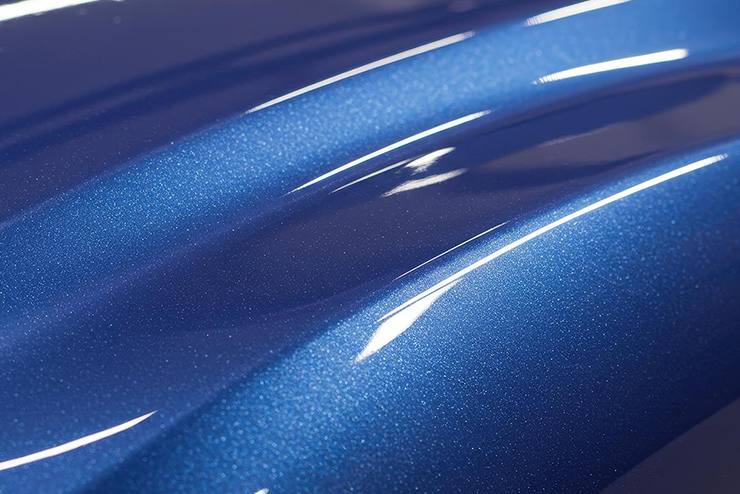
Achieving an accurate color match is one of the most challenging tasks in automotive refinishing, especially when working with metallic and pearl finishes.
Unlike conventional solid colors, metallic and pearl automotive paints contain special-effect pigments that interact with light in complex ways. A repaired panel may appear to match perfectly from one viewing angle but look noticeably lighter, darker, or different in color from another.
For professional body shops, these differences can lead to additional color adjustments, unnecessary material consumption, and costly rework.
Understanding how metallic and pearl finishes behave is essential for achieving consistent, high-quality repairs.
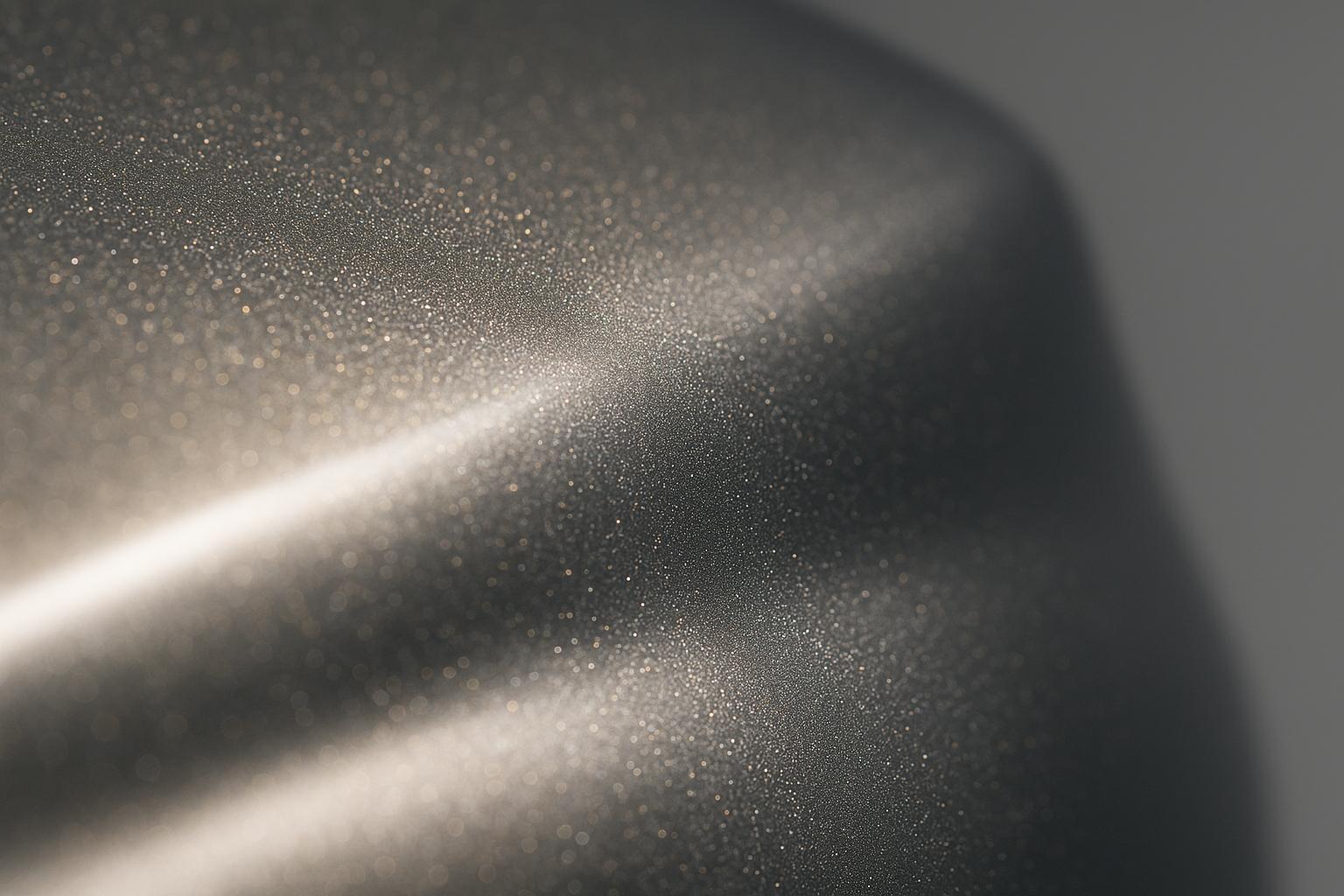
Automotive paint finishes are generally divided into three common categories: solid, metallic, and pearl colors.
Solid Colors
Solid colors primarily use conventional pigments to produce their appearance. Although color matching still requires accuracy, these finishes generally show less angle-dependent color variation than special-effect finishes.
Metallic Colors
Metallic automotive paints contain reflective particles, commonly aluminum flakes, that create a sparkling appearance and a sense of depth.
The orientation and distribution of these particles strongly influence how the color appears under different lighting conditions.
Pearl Colors
Pearl finishes contain special-effect pigments, often based on mica or other engineered substrates with optical coatings. These pigments create color depth, shimmering effects, and sometimes noticeable changes in appearance depending on the viewing angle.
Some pearl finishes also use multi-layer paint systems, making the repair process more complicated.
As a result, matching metallic and pearl finishes requires more than simply selecting the correct paint formula.
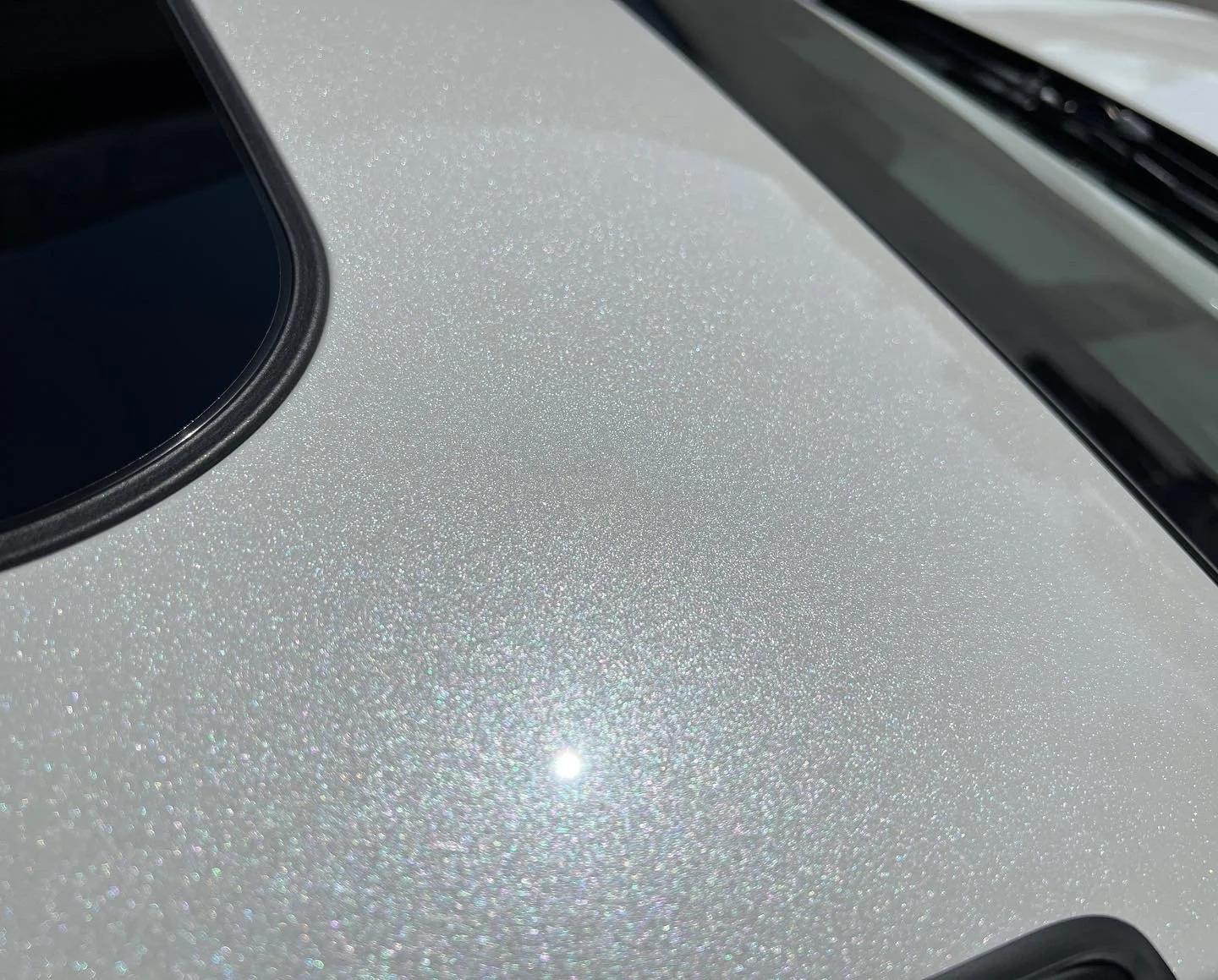
One of the main challenges of metallic and pearl paint matching is a phenomenon commonly known as color travel or flop.
When light strikes a metallic or pearl finish, its appearance changes depending on the illumination and observation angles.
For example, a metallic silver finish may appear bright when viewed near the specular reflection angle but considerably darker from an oblique angle.
Similarly, certain pearl finishes can display subtle changes in hue and brightness as the viewing position changes.
This creates a common repair problem:
A technician may achieve an acceptable color match when looking directly at the repaired panel, only to discover a visible difference when inspecting the vehicle from the side.
Why does this happen?
Several factors influence the visual result:
· The size and shape of metallic or pearl particles
· The orientation of effect pigments within the paint film
· The distribution of pigments throughout the coating
· The optical properties of the paint layers
· The viewing angle and lighting conditions
Because of these variables, a single-angle color measurement may not adequately describe the appearance of a complex automotive finish.
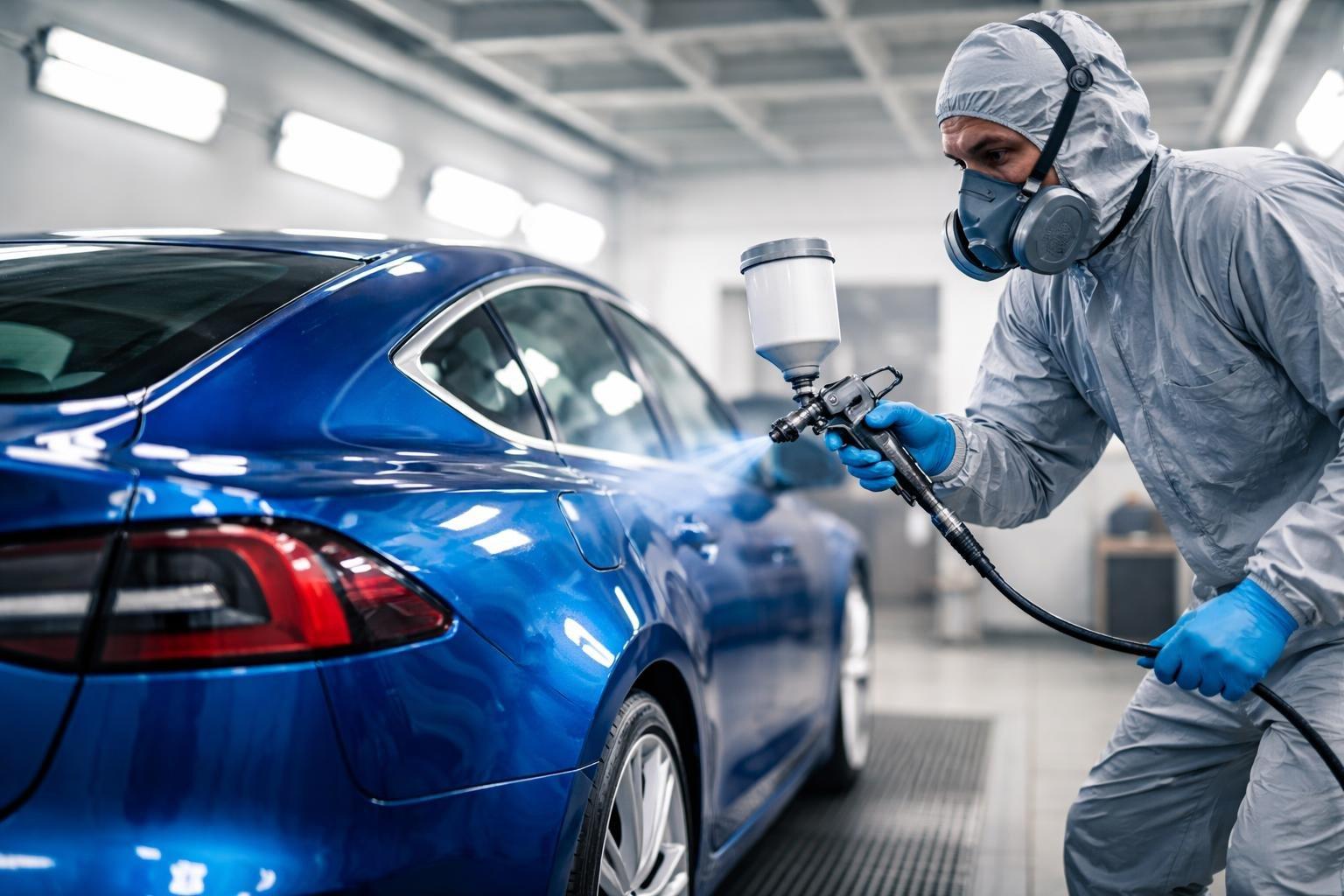
Even when using the correct paint formula, different spraying techniques can produce noticeably different results.
Metallic and pearl pigments are particularly sensitive to application conditions.
Spray Gun Distance and Angle
Changes in spray distance or gun angle can affect paint deposition and the orientation of effect pigments.
Air Pressure and Atomization
Improper atomization may influence the distribution of metallic particles, resulting in uneven appearance or inconsistent color travel.
Coat Thickness
Excessive or insufficient film thickness can affect hiding, pigment distribution, and the final visual appearance.
For certain multi-layer pearl systems, variations in the number or thickness of pearl-effect coats can significantly change the final color.
Flash-Off Time
Insufficient flash-off between coats can affect solvent or water evaporation and may influence the orientation of effect pigments.
For these reasons, technicians should follow the coating manufacturer's application recommendations and maintain consistent spraying techniques.
A correct formula is important, but correct application is equally essential.
Experienced automotive refinish technicians often rely on color chips, visual comparisons, and manual formula adjustments.
These methods remain valuable, particularly when combined with professional judgment and practical spraying experience.
However, metallic and pearl colors introduce additional challenges.
A color that appears correct under workshop lighting may look different in natural daylight. Likewise, a visually acceptable match from one angle may show a noticeable mismatch from another.
Traditional visual evaluation can also be affected by lighting quality, viewing conditions, and differences in individual color perception.
For complex special-effect finishes, a more comprehensive approach is needed.
This is where multi-angle color measurement technology becomes particularly useful.
Modern multi-angle spectrophotometers are designed to evaluate automotive finishes from several measurement angles.
Instead of capturing color information from only one direction, these instruments collect data that helps describe the angle-dependent appearance of metallic and pearl coatings.
Depending on the instrument, measurements may include multiple observation angles and additional information about effect-pigment appearance.
Key advantages include:
· More comprehensive evaluation of metallic and pearl color characteristics
· Improved identification of angle-dependent color differences
· More objective comparison between the vehicle finish and reference formulas
· Better support for selecting and adjusting suitable paint formulas
· Reduced dependence on visual judgment alone
Multi-angle measurement does not eliminate the need for skilled technicians or spray-out testing. However, it provides valuable data that can make the color-matching process more consistent and systematic.
As automotive colors become increasingly sophisticated, refinish professionals need tools that combine reliable color measurement with an extensive formula database.
WASHINTA has developed the WISETONE PLUS AI Color Solution to support modern automotive refinishing requirements.
The system integrates digital color measurement, intelligent formula matching, and continuously updated color data.
Extensive Color Formula Database
WISETONE PLUS provides access to more than 100,000 automotive color formulas, helping technicians search for suitable references across a wide range of vehicle brands and models.
Multi-Angle Color Measurement
The system supports advanced measurement equipment, including the X-Rite MA-5C, which combines multi-angle color measurement with additional appearance information.
This helps technicians evaluate complex metallic and pearl finishes more comprehensively.
Intelligent Formula Matching
By combining measured color information with its formula database, WISETONE PLUS assists technicians in identifying suitable starting formulas and refining their color-matching decisions.
Continuous Formula Updates
The automotive market is constantly introducing new models and color finishes.
Regular database updates help the system respond to evolving vehicle color requirements, including colors used by emerging automotive manufacturers.
Multi-Platform Accessibility
WISETONE PLUS supports workflows across PC and mobile platforms, allowing users to access color information conveniently in different working environments.
Together, these capabilities help body shops establish a more efficient and consistent digital color-matching workflow.
Even with advanced color-matching technology, achieving a professional result requires careful preparation and application.
The following practices can help improve repair consistency.
1. Clean and inspect the original finish
Remove surface contamination and inspect the surrounding panels before taking color measurements.
2. Measure multiple suitable locations
Where practical, evaluate representative areas of the original finish while avoiding damaged, heavily weathered, or previously repaired surfaces.
3. Use appropriate lighting
Compare colors under suitable, controlled lighting conditions and inspect angle-dependent appearance carefully.
4. Follow the recommended mixing formula
Use accurate weighing equipment and follow the specified mixing ratios and application instructions.
5. Prepare a spray-out panel
Apply the selected formula to a test panel using the intended spray technique and coating system.
6. Evaluate the completed coating system
Where applicable, inspect the spray-out panel after applying the required clearcoat, since the final appearance should be evaluated under representative repair conditions.
7. Adjust when necessary
If differences remain, use measurement data and professional judgment to guide formula adjustments before repairing the vehicle.
Combining accurate measurement, reliable formulas, and controlled spraying practices provides a stronger foundation for successful color matching.
Automotive manufacturers continue to introduce increasingly complex exterior finishes, including sophisticated metallic, pearl, and multi-layer effect colors.
These developments create new challenges for automotive refinish professionals.
At the same time, digital measurement instruments, intelligent formula software, and connected color databases are changing how technicians approach color matching.
Rather than relying exclusively on trial and error, body shops can increasingly combine objective measurement data with technical experience.
For automotive refinish businesses, investing in reliable color-matching processes is not simply about improving color accuracy. It is also about supporting consistent repair quality, reducing avoidable adjustments, and improving overall workshop efficiency.
Metallic and pearl automotive paints are difficult to match because their appearance depends on more than pigment color alone.
Effect-pigment orientation, viewing angles, lighting conditions, and spray application techniques all influence the final result.
Successful repairs therefore require a combination of accurate color information, proper application methods, and professional technical judgment.
With advanced multi-angle measurement and intelligent formula support, solutions such as WISETONE PLUS help automotive refinish professionals approach complex color matching with greater confidence and consistency.
Looking for a smarter automotive color-matching solution?
Explore the WISETONE PLUS AI Color Solution from WASHINTA and discover how digital color technology can support your automotive refinishing business.
Contact WASHINTA to learn more about our automotive refinish paint systems and distributor opportunities.

Adresse du bureau de Hong Kong (ALL GOOD (CHINA) LIMITED) : Appartement C, 17e étage, 11-15 Kennedy Town Praya, Hong Kong SAR


 Réseau IPv6 pris en charge



 中文